
☰ Menu
Menu
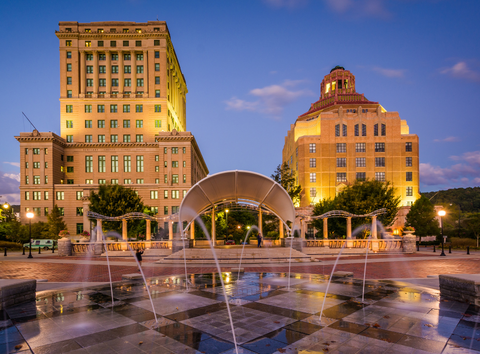
Walk toward Pack Square on a Saturday night in July and you'll hear the fiddles before you can see who's playing them. That's Shindig on the Green, and it has been happening downtown, right on the grass in front of the courthouse, since 1967. This summer is its 60th run. It costs nothing to go. You bring a folding chair or an old blanket, stake out a patch of lawn, and the music starts up around sundown, which is the organizers' polite way of saying seven o'clock.
The stage show is the smaller half of it. Performers get two songs and then they clear off, so the thing you actually came for is happening at the edges, where fiddlers and banjo players and a few old-timers with guitars gather under the trees and just play, for hours, for whoever drifts over. Nobody's working the door at those circles. If you can hold a tune or clap on the beat, you're in. Get there a little before seven, leave the car in one of the downtown decks (free after 6PM), and don't make plans for after.
You won't go hungry. Bear's Smokehouse and The Hop Ice Cream Cafe usually set up on site, and half the restaurants downtown are a two-minute walk from the lawn regardless. Shindig runs most Saturdays through the summer, July 11, 18, and 25, then August 8 on through the end of the month. It skips one Saturday, August 1, and there's a good reason for that.
That's the weekend of the Mountain Dance and Folk Festival, Shindig's older and slightly dressier cousin. Bascom Lamar Lunsford started it back in 1928, which makes the 2026 edition the 99th and, by most accounts, the longest continuously running festival of its kind anywhere in the country. Three nights, Thursday through Saturday, July 30 to August 1. It moves indoors, you buy a ticket, and you get the clogging teams and the ballad singers and string bands who have been carrying these tunes for the better part of a century. Shindig is the loose, come-as-you-are version. This is the one where the whole tradition puts on a clean shirt.
The middle of the month belongs to the Craft Fair of the Southern Highlands, which fills Harrah's Cherokee Center over on Haywood Street from July 16 to 19. Ten to five each day, twelve dollars to get in, free if you've got kids under twelve. More than a hundred makers set up, every one of them a juried member of the Southern Highland Craft Guild, which has run this fair since 1930. Pottery, hand-built furniture, glass, jewelry, weaving. You buy straight from the person who made the thing, and a lot of the time you can stand there and watch them make it. This year the Qualla Arts and Crafts Mutual is back for the first time in close to thirty years, bringing Cherokee basketry and carving and beadwork, so it's worth the trip even if you're a regular.
Spend one July going to all three and you'll understand this town better than any property listing could put across. The people picking in those jam circles mostly live within a few miles of that lawn. Some are up the hill in Montford; some are south of downtown in Kenilworth; plenty are out in West Asheville; and a good number are in Black Mountain, about 20 minutes east. The music and the makers and the neighborhoods are all part of the same thing here, and after a couple of Saturday nights on the green you tend to start wanting a place close enough to walk home from. Seeing the community come back together after the challenges of the past few years is one of the many reasons people love calling Asheville home.
If that's the kind of summer you'd want on repeat, the Troy Flack Group knows which neighborhoods make it easiest, from the walkable pockets downtown to the quieter spots a short drive out. Troy Flack has worked this market for close to thirty years, twenty of them as a state-certified appraiser, so when you do find the right house you'll know what it's actually worth before you sign anything. No rush, no pressure. When you want to talk it through, they're on Grove Street, a few blocks from the same green where the fiddles start up every Saturday night.